Walk In The Park

Copyright 2009 Jens Haas - www.jenshaas.com

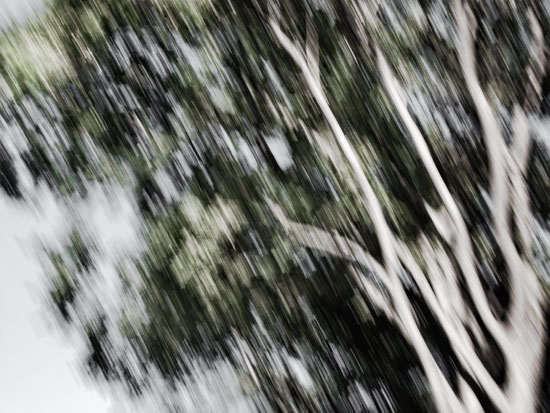
I’ve been thinking about how to photograph trees for many years. However, I agree with a painter friend of mine that they are the most difficult sujet of all. Too obviously beautiful. But I’m drawn to essential subjects. And trees are one of the most essential subjects I can think of. The tree series started as a side project for the blog this past summer. By now I have about 20 samples from my new territory, the northern, wilder parts of Central Park, and I just put them on my website alongside my more advanced projects, here. It’s work in progress, but I’m quite happy with it.

On The Battlefield

Copyright 2009 Jens Haas - www.jenshaas.com

I can’t think of a stronger ending of a novel than the last three pages of Thomas Mann’s “The Magic Mountain.” All of a sudden, the lavish routines of a well-to-do crowd, nursing their illnesses, intellectual ambitions, and romantic obsessions in a Swiss sanatorium, have come to an abrupt end. The protagonist, Hans Castorp, finds himself on the battlefield of World War I, and his death seems imminent. However, while powerfully written, the ending only has its full impact if you read the 700 pages preceding it.

So here comes what in my book is the second-strongest ending of a novel, from “Post Office,” an autobiographic work that describes the protagonist Henry Chinaski, aka Charles Bukowski, slaving away as a postal clerk in Los Angeles. Now, I know a highly talented, imaginative, and overall wonderful person who worked for the postal services, and loved it! I guess it just wasn’t for Bukowski, and after almost 12 years and only a few months shy of his 50th birthday, he breaks free from job security, gets drunk for a couple of days, and dives into what became perhaps the most notorious career of a writer in the 20th century. Here’s how the book ends – this also works best if you read the 196 pages leading up to it, making the odds of what was about to happen extremely unlikely:

And in the morning it was morning and I was still alive.
Maybe I’ll write a novel, I thought.
And then I did.
Prunes and Plums In Manhattan, By Mara L.

Copyright 2009 Mara L. - www.jenshaas.com

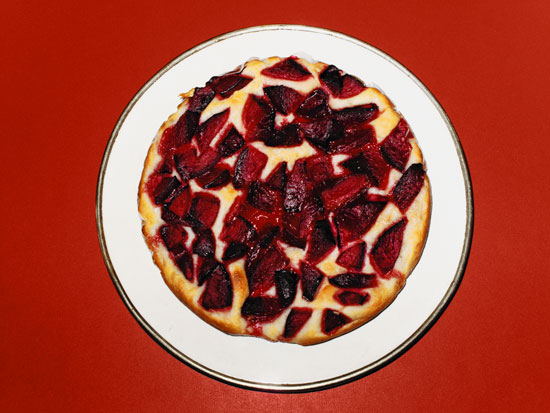
The last couple of weeks involved a great discovery. America is the country of prunes and plums. I am stunned by the variety and quality – it feels as if every farmer here grows another kind. Each and every one I tried was fabulous. Of course, I’m a rather critical buyer. I know what to look for in plums. But since I started my baking-with-yeast project (here), I’ve discovered that there couldn’t be a better place for it. Every kind of plum and prune that I bought made a perfect filling for my little Alpine dumplings! And since they have such beautiful colors, I’ve started to also make little cakes with the plums on top.

This is a matter that goes right to my heart. It’s about my earliest experiences in the kitchen. My grandfather had a fruit orchard, where we all helped out in the summer picking the fruit. He had an almost professional kitchen (the amateur-chef personality runs in the family), and was continually cooking preserves while we kids brought in more supplies from the garden. My personal speciality were Reine Claudes, Green Gage Plum. I don’t really eat preserves, and accordingly don’t bother with it, though I guess I could make preserves while half asleep. Everyone in my family spends their summers throwing fruit and sugar into large pots and competing for the most beautiful colors and aromas (think: a little bit of Obstler can’t hurt). For preserves that look just right, see chez Pim’s webpage. What I liked most about the Reine Claudes is that you have to climb deep into the trees to harvest them, and that they have the most amazing green. Who would have thought that you can buy them in Manhattan!